
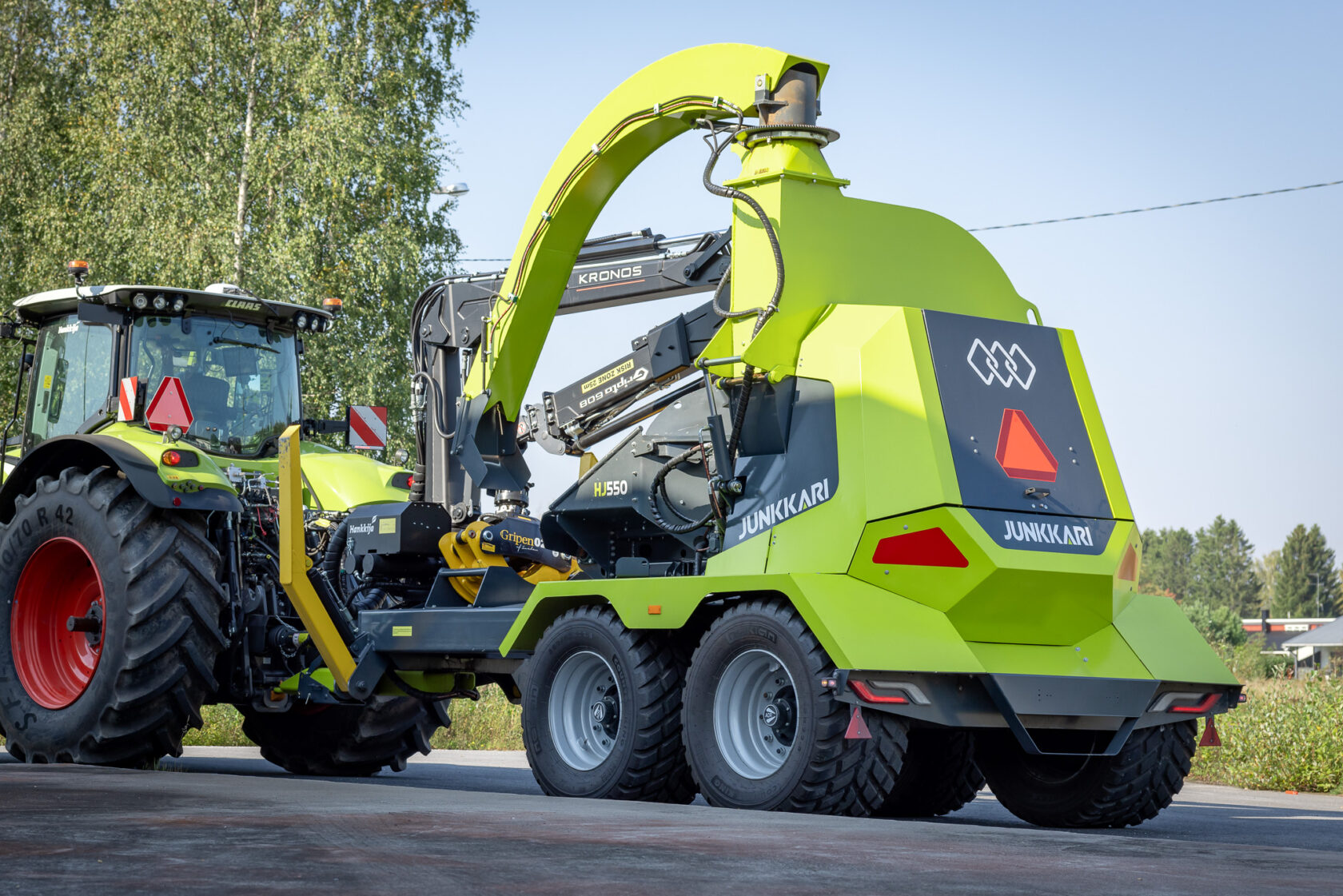
For profitable chipping operations, the machine needs to spend as much time as possible in productive work. When a machine is designed for easy maintenance, downtime is reduced and operating costs are easier to control. When choosing a chipper, it is therefore important to consider how much time and work its maintenance requires.
Maintenance can account for a large share of costs
In a long-term study of 51 chippers used in professional operations, published in 2019, maintenance and repairs accounted for an average of 14% of the total chipping costs. The variation between machines was considerable, ranging from 1.5% to 29%.
Alongside the purchase price and fuel consumption, it is therefore worth considering the time and work required for maintenance. Long periods of downtime quickly affect the profitability of contracting work.
Easy maintenance reduces downtime
Blade condition affects both chip quality and chipper capacity. In a 2024 study on professional chipping operations, blade wear reduced the productivity of the chipper studied by more than 20%. As the blades wore, the time required to produce one load of wood chips increased from approximately 25 minutes to 38 minutes.
For a contractor, this is a significant difference. That is why maintenance needs to be straightforward whenever it is required. The HJ550’s service points are easy to access, and the necessary work can be completed without unnecessary dismantling. This helps get the machine back to work quickly.
A clear chipper design makes maintenance easier
A disc chipper has fewer moving parts than a drum chipper. This reduces the number of components requiring maintenance and keeps the design clear.
The HJ550’s blade setting can be adjusted continuously between 4 and 20 millimetres according to the required chip size.